Market Overview
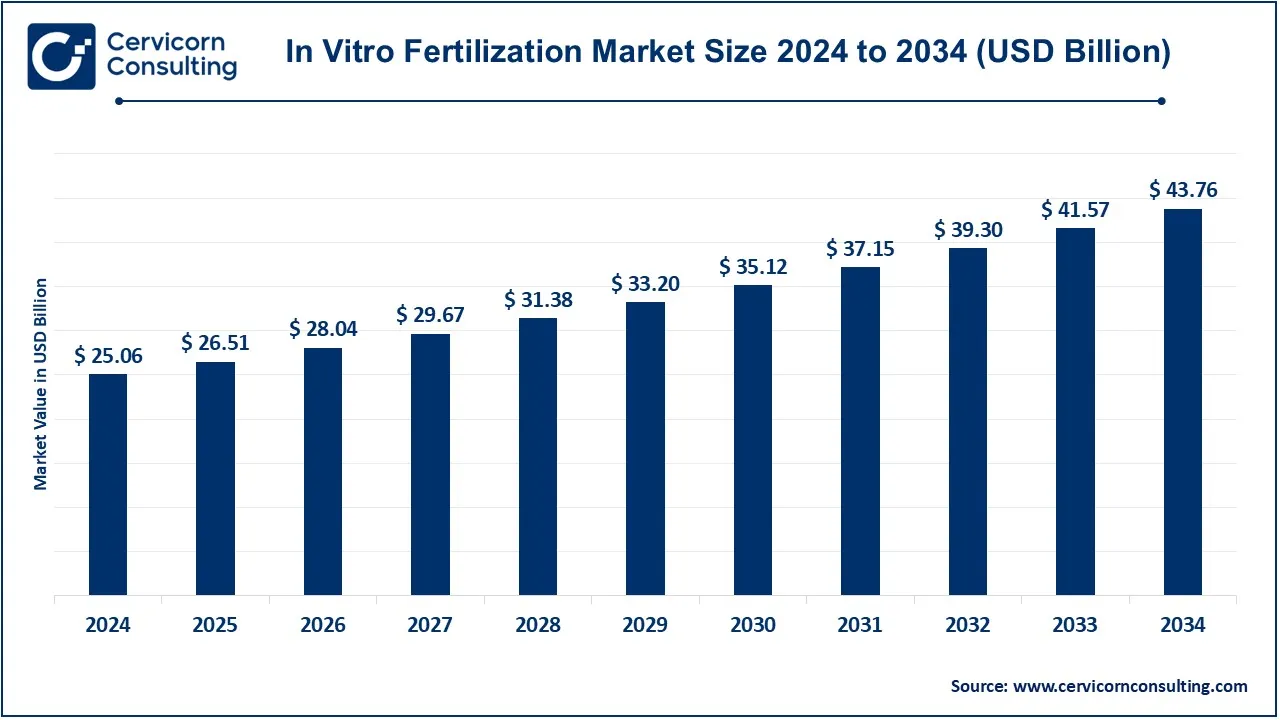
The global in vitro fertilization market was valued at USD 25.06 billion in 2024 and is forecasted to reach approximately USD 43.76 billion by 2034, expanding at a CAGR of 10.6% between 2025 and 2034. Market expansion is primarily driven by the rising incidence of infertility, growing social acceptance of fertility treatments, and technological advancements in assisted reproductive technologies (ART).
Additionally, improvements in healthcare infrastructure, the rise of medical tourism, and economic growth in emerging markets are contributing to wider accessibility and affordability of IVF procedures. In 2024, the Asia-Pacific region accounted for roughly 37.9% of the global market share, bolstered by the presence of cost-effective treatment options, skilled practitioners, and supportive government initiatives.
Key Market Trends
1. Artificial Intelligence in Embryo Selection
The use of artificial intelligence (AI) in IVF is revolutionizing embryo selection and viability analysis. AI-powered algorithms, often combined with time-lapse imaging (TLI), allow clinicians to evaluate thousands of embryo images, helping them select the most viable embryos for implantation. This technology has improved clinical efficiency and success rates, making IVF treatments more predictable and effective.
2. Growth in Genetic Screening and Diagnosis
Techniques such as Preimplantation Genetic Testing (PGT) and Preimplantation Genetic Diagnosis (PGD) are increasingly integrated into IVF procedures. These innovations allow for the early identification of chromosomal or genetic abnormalities before embryo transfer, enhancing success rates and reducing the risk of inherited conditions.
3. Technological Evolution in IVF Laboratories
Automation, robotics, and nanotechnology are transforming IVF laboratories. Cutting-edge innovations such as robotic-assisted micromanipulation, automated incubators, and continuous embryo monitoring systems are improving accuracy, consistency, and efficiency—reducing manual errors and enhancing patient outcomes.
4. Rising Demand for Fertility Preservation and Non-Invasive Techniques
With increasing awareness about fertility preservation, cryopreservation of eggs, sperm, and embryos is becoming more common—particularly among individuals delaying parenthood or undergoing medical treatments. Moreover, non-invasive embryo and prenatal testing is reducing procedural risks and improving comfort and patient experience.
5. Expansion of Fertility Tourism
Countries like India, Spain, Thailand, and the Czech Republic are emerging as global fertility hubs, offering high-quality IVF services at competitive prices. This trend is driving cross-border collaborations and expanding global accessibility to reproductive care.
Get a Free Sample: https://www.cervicornconsulting.com/sample/2481
Market Drivers
1. Increasing Infertility and Lifestyle Shifts
Globally, around 15% of couples experience infertility challenges. Factors such as delayed marriages, advanced maternal age, urban stress, and environmental pollution are contributing to declining fertility rates, thereby escalating the demand for IVF treatments.
2. Higher Success Rates and Awareness
Improved technologies and refined clinical protocols have raised IVF success rates from about 25% to nearly 50% over the past decade. Meanwhile, rising public awareness, coupled with greater societal acceptance of fertility treatments, continues to attract more individuals to IVF solutions.
3. Technological Progress Enhancing Efficacy
Advances in AI analytics, cryopreservation, genetic testing, and embryo culture techniques are improving conception rates and reducing time to pregnancy. These developments strengthen patient confidence and drive faster market adoption.
4. Supportive Government Policies
Across multiple regions, governments are offering insurance coverage, tax benefits, and research funding for reproductive treatments. Such policy frameworks are enhancing affordability and accessibility, especially in developed markets like North America and Europe, as well as growing economies in Asia-Pacific.
5. Expansion of Clinic Networks and Medical Tourism
The rapid growth of fertility clinics, particularly in Asia-Pacific, is improving access to IVF services at competitive prices. At the same time, medical tourism is fostering international collaborations and expanding opportunities for fertility care providers.
Impact of Trends and Drivers
-
Fertility Clinics and Hospitals: Adoption of AI, automation, and genetic testing has significantly improved success rates and operational efficiency, leading to enhanced patient satisfaction and profitability.
-
Device and Reagent Manufacturers: Demand for specialized culture media, cryopreservation tools, and diagnostic reagents is growing in line with technological upgrades in IVF labs.
-
Regional Markets:
-
Asia-Pacific: Dominates due to affordability, skilled professionals, and growing awareness.
-
North America: Leads in adoption of AI and genetic screening innovations.
-
Europe: Benefits from regulatory support and strong fertility tourism networks.
-
-
Consumers and Patients: Advancements in non-invasive diagnostics, automation, and personalized fertility treatments are making IVF more accessible, efficient, and less emotionally taxing.
Challenges and Opportunities
Challenges
-
High Cost of Treatment: Despite progress, IVF remains expensive in several markets, limiting accessibility for middle- and lower-income groups.
-
Ethical and Legal Complexities: Regulations surrounding surrogacy, embryo manipulation, and genetic testing vary across countries, posing challenges for standardization.
-
Emotional and Physical Strain: IVF procedures can be physically and psychologically demanding, affecting patient willingness to pursue multiple treatment cycles.
Opportunities
-
AI and Automation Integration: Data-driven and robotic-assisted systems can lower costs, enhance precision, and streamline operations.
-
Expanding Markets in Developing Regions: Rising healthcare investment in Asia, Latin America, and the Middle East presents major growth potential.
-
Inclusive and Personalized Fertility Solutions: Growing demand for LGBTQ+ reproductive services and fertility preservation opens new market opportunities.
Future Outlook
The global IVF market is on track to expand from USD 25.06 billion in 2024 to USD 43.76 billion by 2034, reflecting a steady CAGR of 10.6%. Future growth will be shaped by continuous innovation in AI-powered embryo selection, genetic diagnostics, and non-invasive fertility technologies.
Moreover, the industry is moving toward a data-driven, patient-centric ecosystem, emphasizing personalization, transparency, and global accessibility. With growing policy support, evolving technology, and increased public acceptance, the IVF market is poised to redefine reproductive healthcare over the next decade.
To Get Detailed Overview, Contact Us: https://www.cervicornconsulting.com/contact-us